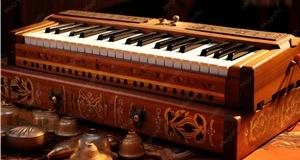
The Harmonium is a free-reed keyboard instrument that arrived in India in the 19th century and became deeply woven into the fabric of Indian musical culture. From concert stages to temples, from classical recitals to devotional bhajans, the harmonium is present at the heart of Indian music-making in all its forms.
The Harmonium is uniquely suited to Indian music because it naturally produces the sustained, pure tones that Indian classical music demands. Students learn Sargam (Sa Re Ga Ma Pa Dha Ni — the Indian notation system), Ragas, Alankaars (melodic patterns), Bhajans and the art of accompanying vocalists — making it the ideal companion for any student also pursuing Hindustani Vocal.
At Swar Kala Sangam, certified Harmonium teachers guide students from absolute beginners through to advanced performers and exam candidates, following the Prayag Sangit Samiti curriculum.
सरगम · Sargam
The Indian Scale
Sa Re Ga Ma Pa Dha Ni — the Indian musical notation system equivalent to Do Re Mi. Learning Sargam is the foundation of all Harmonium playing and the entry point to Indian classical music theory.
राग · Raga
The Melodic Framework
Specific ascending/descending note sequences that define the character of each Raga — from the morning Raga Bhairav to the evening Raga Yaman. The Harmonium is the ideal instrument for Raga exploration.
अलंकार · Alankaar
Melodic Patterns
Systematic scale exercises combining specific note sequences in ascending and descending patterns — building finger independence, speed and familiarity with the keyboard layout.
संगत · Sangat
Accompaniment Art
The art of accompanying vocalists — following the melody, supporting the Raga, filling the tonal space and responding musically to the singer in real time.