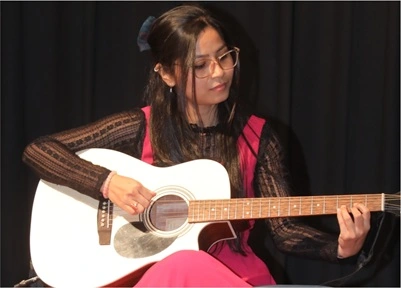

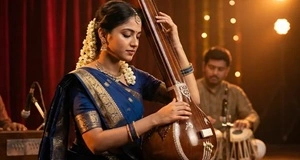
The Sitar is a long-necked plucked string instrument that is the defining sound of North Indian classical music. With its characteristic resonating strings (sympathetic strings), movable frets and the unique plucking technique using a wire mizrab (plectrum), the Sitar produces a sound of extraordinary richness, depth and expressiveness.
Sitar playing is built on the same Raga and Tala framework as Hindustani Vocal — but expressed through the unique physical language of the instrument. The classical Sitar recital form progresses through Alap (slow, meditative Raga development), Jod (rhythmic development), Jhala (fast, exciting climax) and Gat (composed section with Tabla accompaniment).
At Swar Kala Sangam, certified Sitar teachers guide students through the complete Hindustani classical Sitar curriculum in the authentic Guru-Shishya tradition, following the Prayag Sangit Samiti examination pathway.
आलाप · Alap
Slow Raga Development
The opening section of a classical Sitar performance — slow, unmetered exploration of a Raga's notes, phrases and emotional character, building the melodic world of the Raga.
मींड · Meend
Gliding Between Notes
The technique of sliding smoothly between notes by bending the string — one of the Sitar's most expressive and characteristic sounds, impossible on keyboard instruments.
गमक · Gamak
Ornaments & Grace Notes
The ornamental phrases, trills and characteristic movements that give each Raga its personality — the difference between notes on a page and living, breathing music.
झाला · Jhala
Fast Climactic Playing
The exciting, fast section of a classical performance where the drone strings are struck rapidly, creating a rhythmic cascade — the thrilling climax of a Sitar recital.