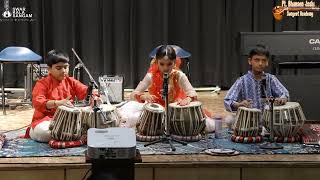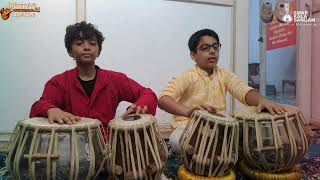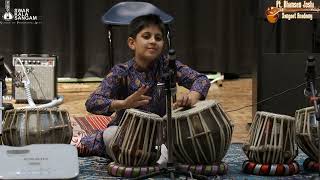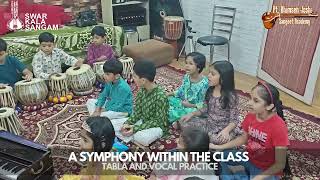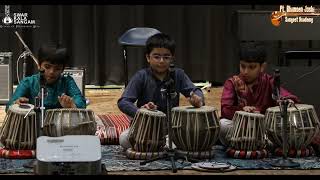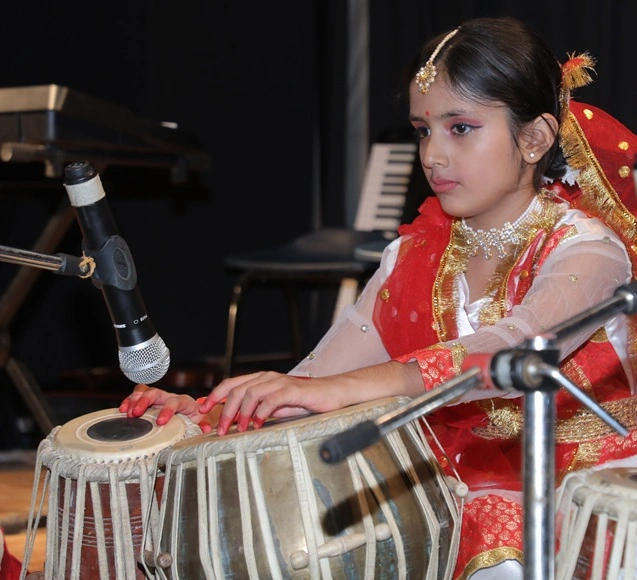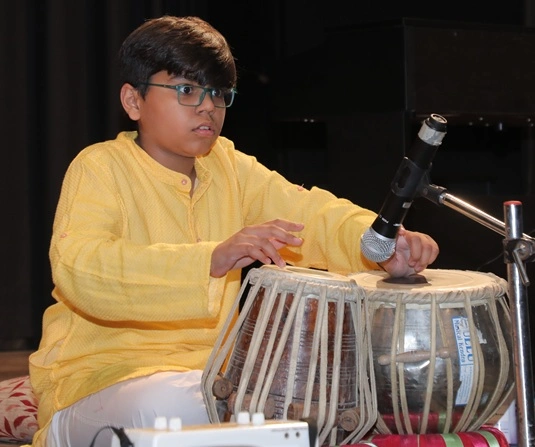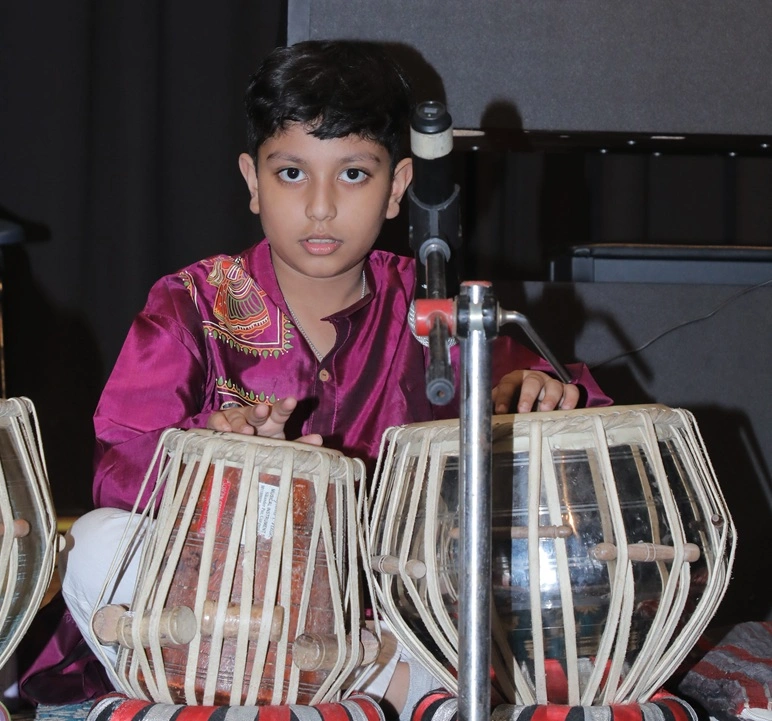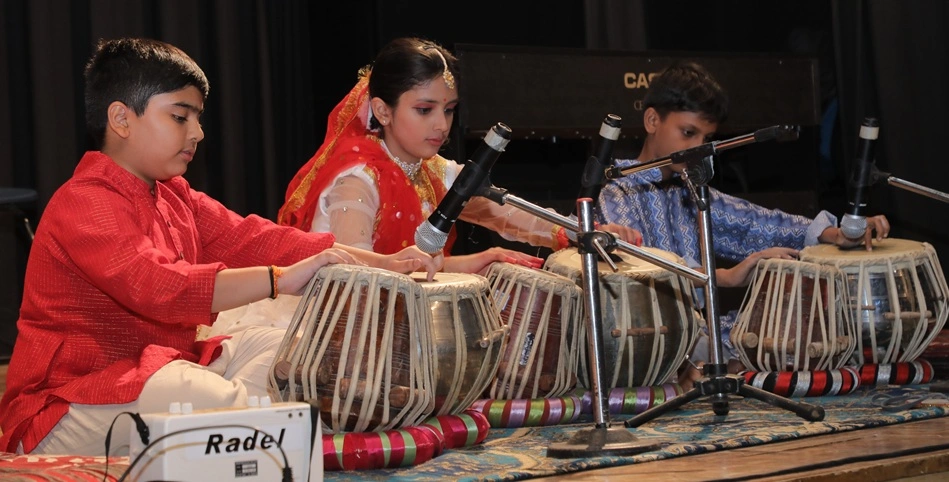
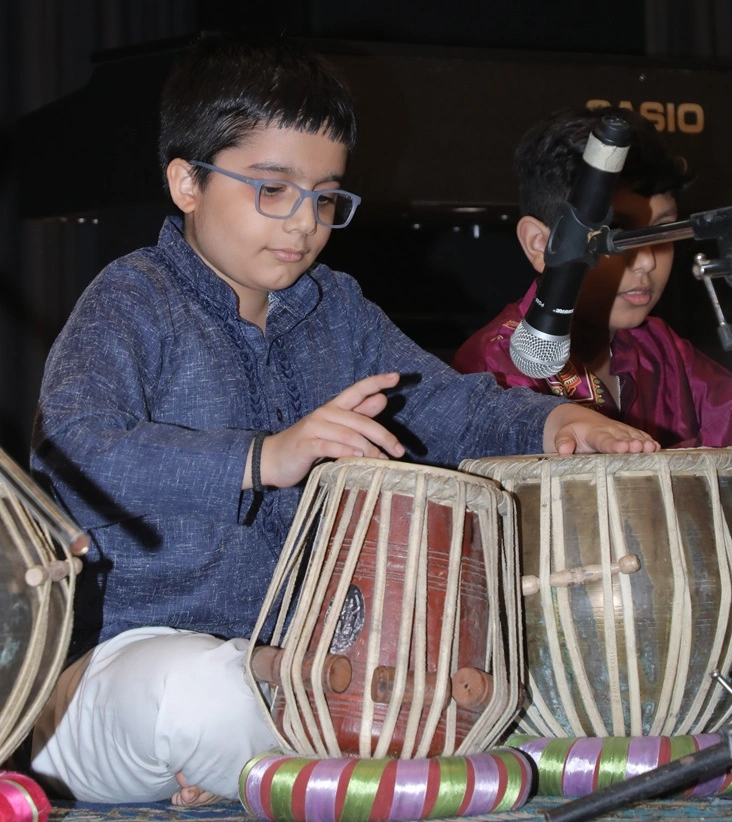
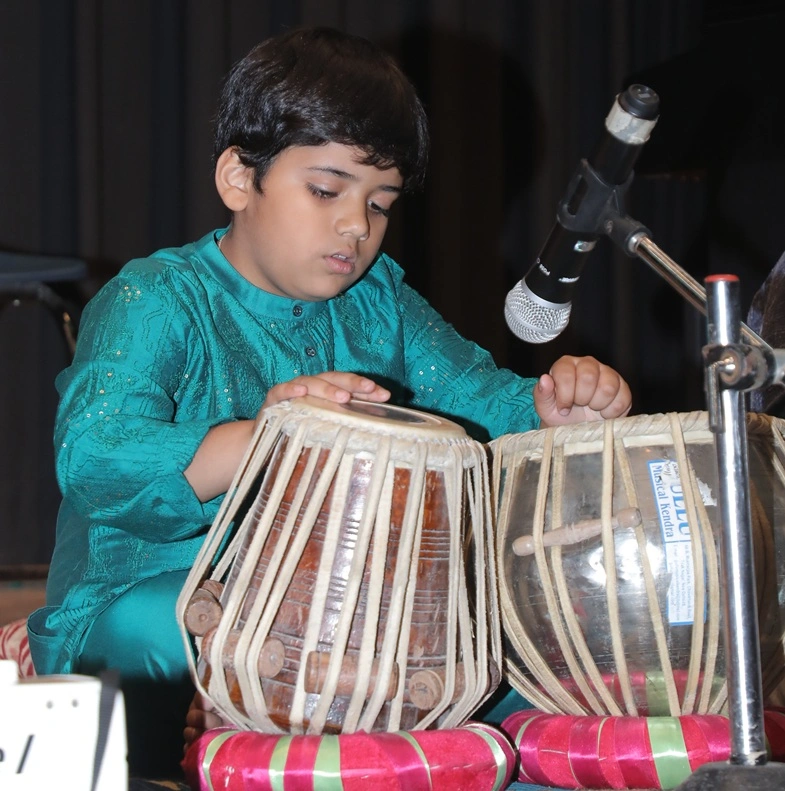
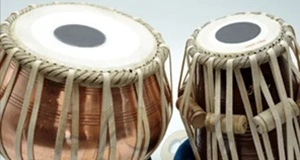
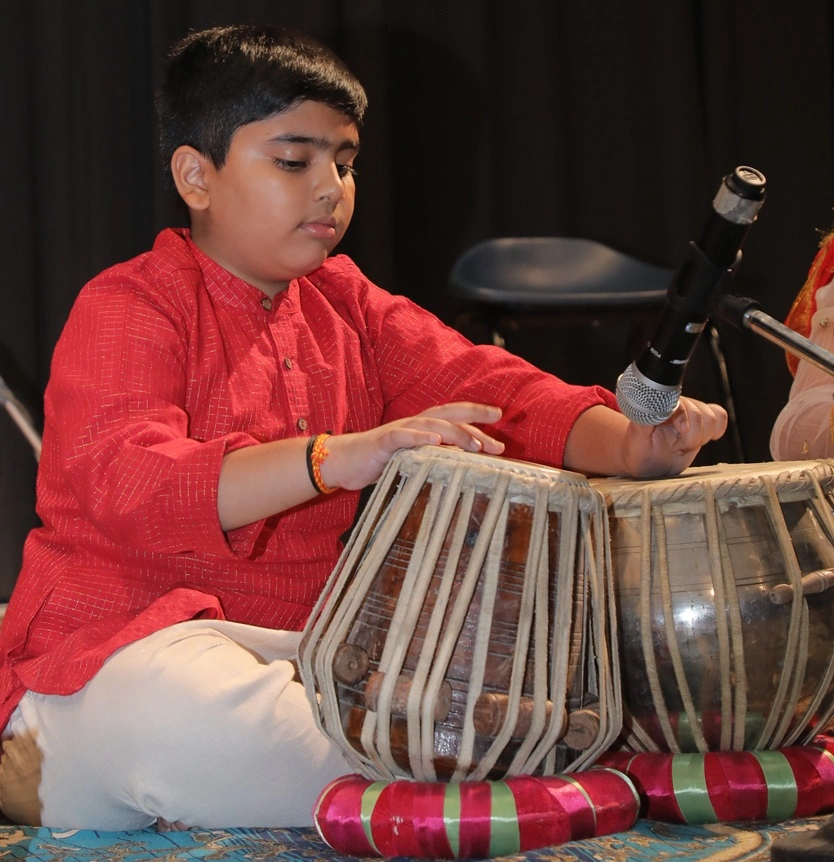
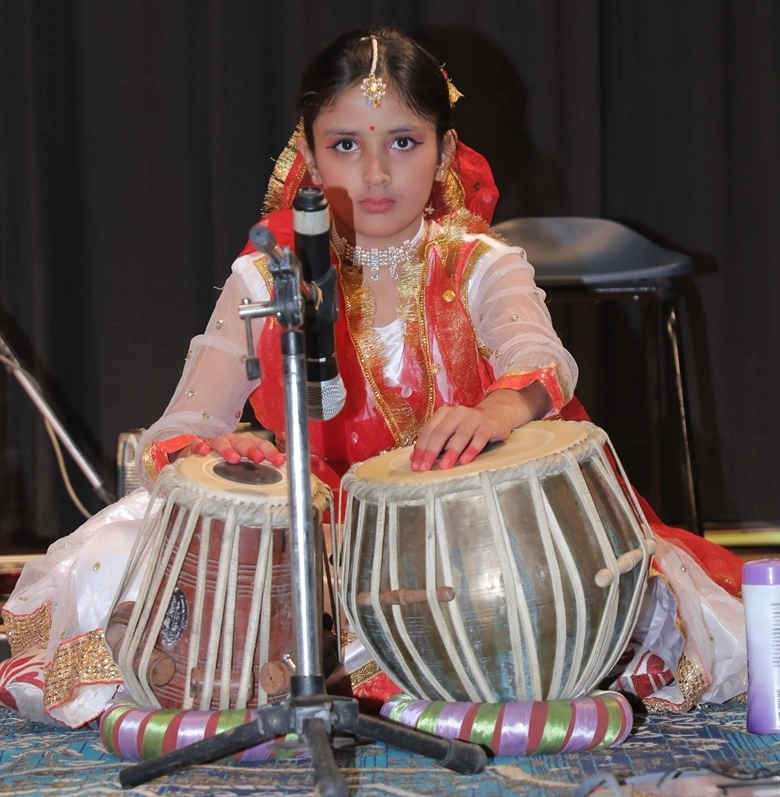
Tabla is a pair of hand drums — the Dayan (right, treble) and Bayan (left, bass) — producing one of the most expressive percussive languages in the world. The Tabla became the primary rhythmic accompaniment for Hindustani Classical Music from the 18th century, replacing the older Pakhawaj.
The Tabla's vocabulary is built on Bols — mnemonic syllables (Dha, Dhin, Tun, Na, Ge, Ke) representing specific strokes. These combine into Kaidas (fixed compositions with variations), Relas (fast patterns), Tihais (threefold cadences) and Gats — creating an art form of extraordinary depth.
At Swar Kala Sangam, certified Tabla teachers train students from absolute beginners through to solo performers and exam candidates, following the Prayag Sangit Samiti syllabus in the authentic Guru-Shishya tradition.
बोल · Bol
The Rhythmic Syllable
Mnemonic syllables for specific Tabla strokes: Dha, Dhin, Tun, Na, Ge, Ke. Each has precise finger placement, pressure and resonance — the alphabet of the Tabla language.
ताल · Taal
The Rhythmic Cycle
Recurring beat cycles: Teentaal (16), Keherwa (8), Dadra (6), Jhaptaal (10). Mastery of Taal is the foundation of all Tabla performance.
कायदा · Kaida
Fixed Composition
Structured rhythmic composition with theme and variations — the formal grammar exercise of Tabla, developing speed, clarity and finger independence.
रेला · Rela
Fast Fluid Patterns
Rapid, flowing compositions developing speed and dexterity. Relas showcase technical brilliance and are among the most impressive Tabla performances.