



For online music classes you need: a phone, tablet or laptop with a camera and microphone, a stable internet connection of about 10 Mbps or more, Zoom or Google Meet (both free), a quiet, well-lit space, and your instrument if you're learning one. Singing, Kathak and art need little or no special equipment to begin.
You don't need a studio to learn music online. Most students start with what they already have at home: a phone or laptop, a home internet connection and a quiet corner. This checklist covers everything you need for online singing, tabla, harmonium, Kathak, piano, guitar and art classes.
1. A device
A smartphone, tablet, laptop or desktop all work — iOS, Android, Windows or Mac.
| Device | Good for | Tip |
|---|---|---|
| Smartphone | Vocal, most instruments | Use a stand; landscape mode |
| Tablet | All courses | A larger screen makes demonstrations easier to follow |
| Laptop / desktop | All courses, especially dance and piano | Best screen size; can connect to a TV |
A simple stand or tripod keeps the camera steady and at the right angle. Keep the device plugged in or fully charged.
2. Internet connection
- A stable connection of about 10 Mbps or more — home broadband or good 4G/5G.
- Sit close to the Wi-Fi router, or use a wired connection on a laptop.
- Pause downloads and streaming on other devices during class.
3. Zoom or Google Meet
Most online music schools use Zoom or Google Meet — both are free. Install the app and test your camera and microphone before your first class.
- Zoom's noise suppression is designed for speech and can cut sustained notes or tabla strokes.
- In Zoom's audio settings, enable the option to preserve original sound for musicians, and turn it on when you sing or play.
- Your teacher can help you set this up in the first class.
4. Camera angle by course
| Course | Camera should show |
|---|---|
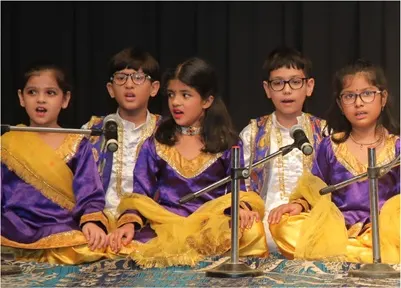
| Vocal | Face, shoulders and posture |
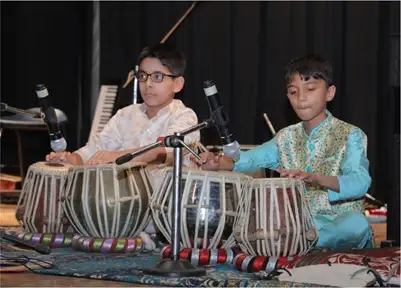
| Tabla | Both hands and both drums, from slightly above and in front |
| Harmonium | Keyboard, both hands and bellows |
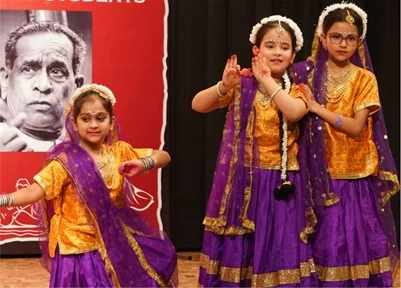
| Kathak / Bharatnatyam | Full body, head to feet, from 2–3 metres |
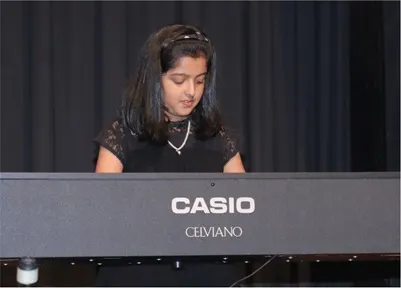
| Piano | Both hands on the keys, from the side or above |
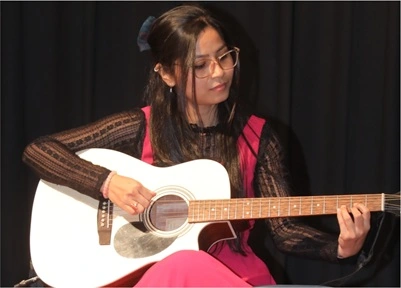
| Guitar / Violin / Sitar | Both hands and the instrument, from the front |
| Bansuri | Face, fingers and posture |
| Art | Your paper or canvas |
Try a Live Class — Free
Meet your teacher, discuss your goals and get a recommendation on the right class format. No payment needed.
5. Instruments and materials
- Vocal: nothing special to start. A harmonium or a tanpura/shruti app helps later.
- Tabla: a tabla set (dayan and bayan) with rings (chutta).
- Harmonium, sitar, bansuri, violin, guitar: the instrument itself — ask your teacher which size or scale to buy.
- Piano: a piano or a keyboard, ideally with full-size keys.
- Kathak / Bharatnatyam: a clear space of about 6 × 8 feet with a non-slip floor — see Kathak at home.
- Art: basic drawing and painting materials.
Not sure what to buy? Take a trial class first — a teacher can tell you what you need and what to avoid.
6. A good learning space
- A quiet room with the door closed.
- Light in front of you, not behind.
- Water, a notebook and a pencil for practice notes.
- For dance: furniture moved, floor clean and dry.
Before your first class: quick checklist
- App installed and class link saved.
- Camera angle tested — ask someone to check what the teacher will see.
- Device charged and on a stand.
- Instrument tuned and ready.
- Join five minutes early.
Start Your Musical Journey Today
Live online classes from India and in-person classes in Gurgaon. Your first class is free — no payment, no commitment.
Written by the faculty team at Swar Kala Sangam Sangeet Academy — the music academy of Pt. Bhimsen Joshi Sangeet Academy, founded in 1978. Information is general guidance and correct as of 22 November 2026; examination boards and fees can change, so always check current details.